
They Only Try It Once
129 decibels and a hard strobe, the second anything crosses 125° of your yard. Solar powered — no wiring, no batteries to buy, no monthly fee.
USB Backup
Weatherproof
+ Strobe
Night-Only
Dark Yard. Then 129 Decibels.
Nothing about this is subtle, and that is the point. A deer hears it once and leaves the beds alone for weeks. A stranger hears it and does not want to find out what else is switched on.
A Guard Dog That Runs on Sunshine
129dB is not a beep
It is closer to a smoke alarm held at arm's length. Loud enough to put a deer over the fence and turn someone back down the drive before they reach the shed.
Sees 125°, out to 26 feet
A wide PIR arc covers a whole raised bed, a coop run or a side gate from one mounting point — not a narrow beam you have to aim perfectly.
Solar, with a USB backup
Six to ten hours of sun fills it, and a full charge runs about fifty nights. For a long grey stretch, plug it in — the cable is in the box.
Four modes, two of them silent
Siren and strobe around the clock, strobe only, or either one limited to night. The silent modes still flash, which keeps animals off without waking the neighbours.
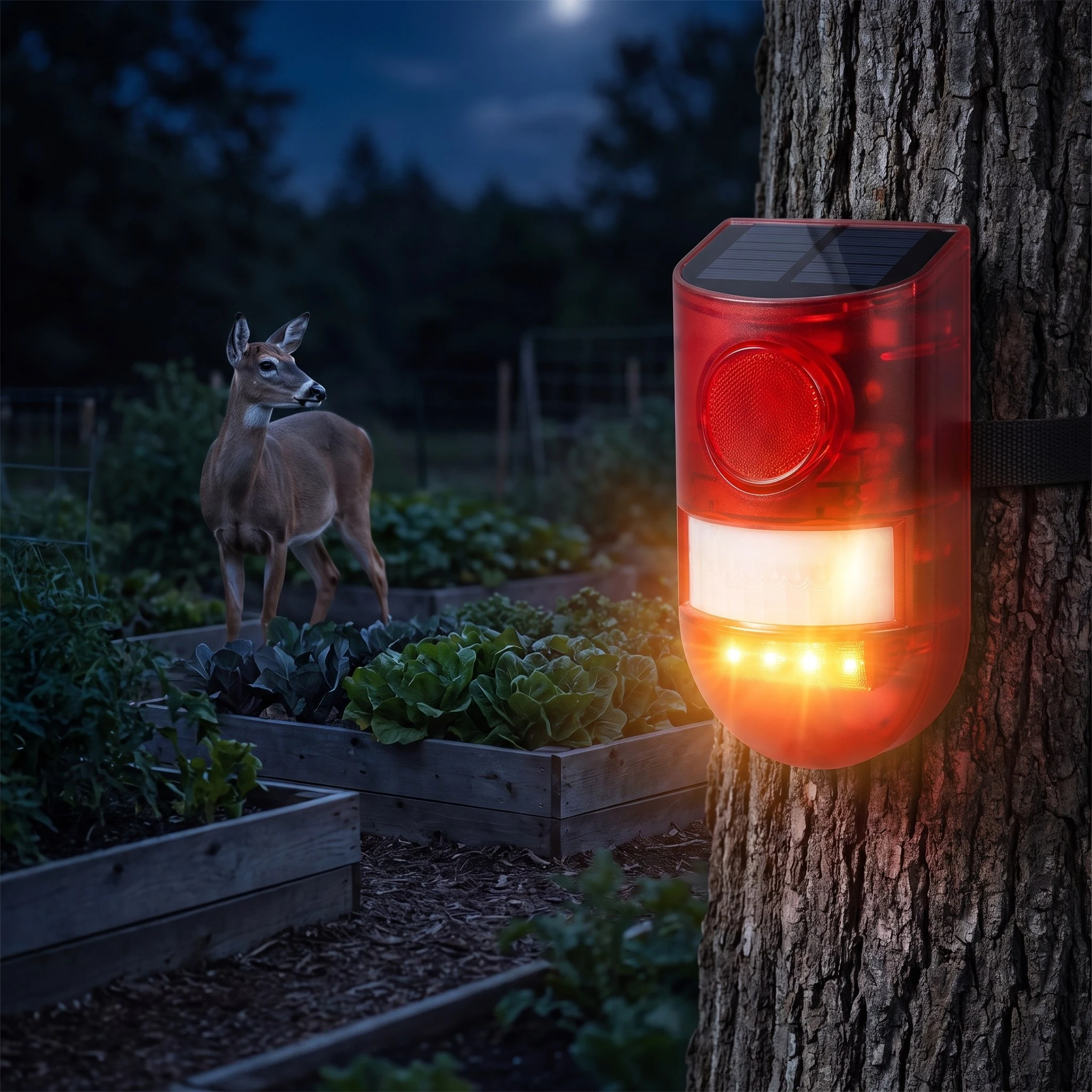
The Garden Raid Ends at the First Flash
Deer, raccoons and rabbits work a routine. Break it once with noise and light they cannot place, and they route around your garden instead of through it. No netting, no spray, nothing to reapply after rain.
- Works on deer, raccoons, coyotes, dogs and rabbits
- Triggers across a 125° arc, up to 26 ft out
- Strobe-only mode for a quiet neighbourhood
- Nothing to refill, replace or reapply
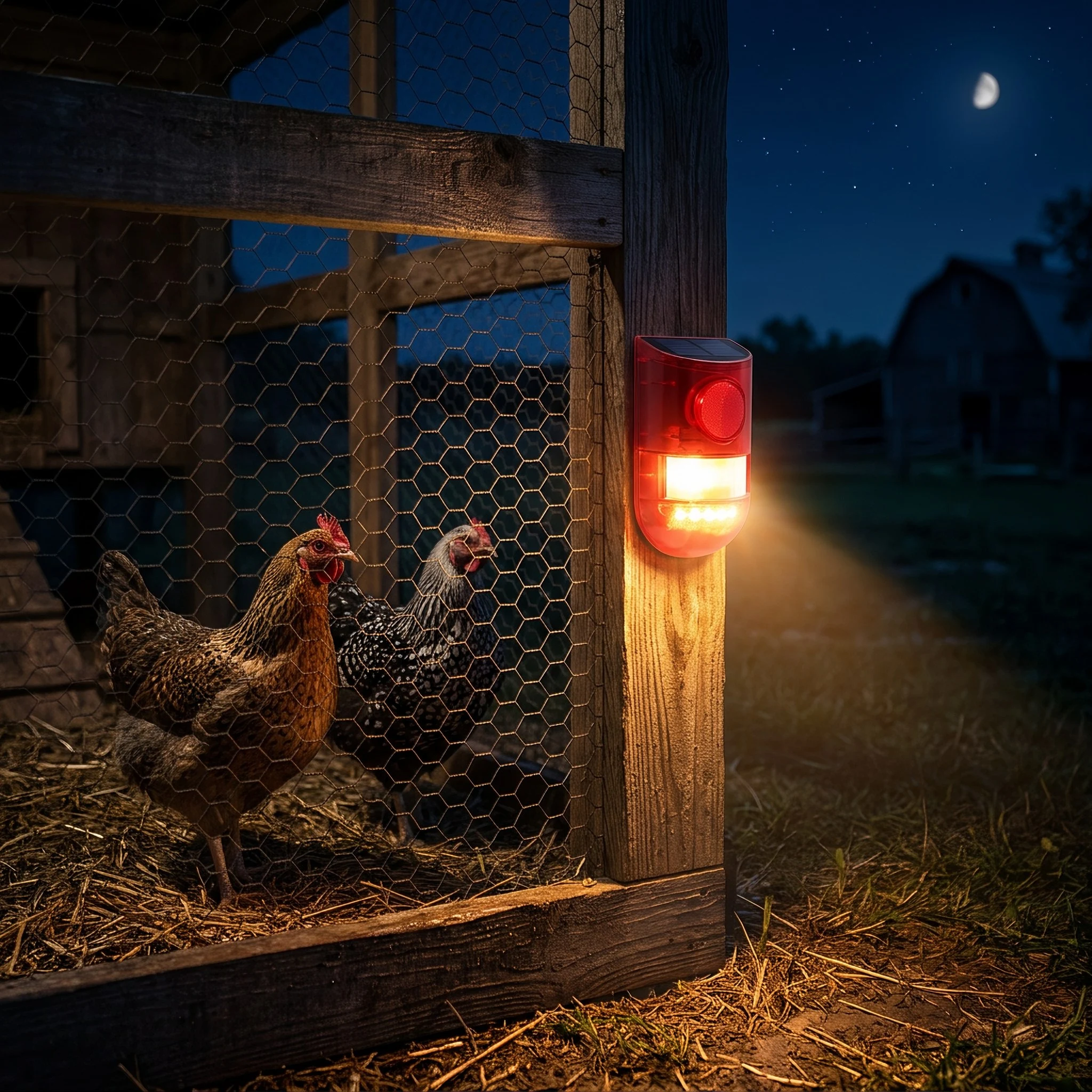
For the Things You Cannot Replace
A coop, a hutch, a beehive or a row of fruit trees is a whole season of work behind one thin bit of wire. This sits on the post beside it and reacts faster than you can get out of bed.
- Mounts 1 to 8 ft up on a post, fence, tree or wall
- IP65 sealed against heavy rain, snow and dust
- Runs about fifty nights on one full charge
- Add another at any gap in the perimeter
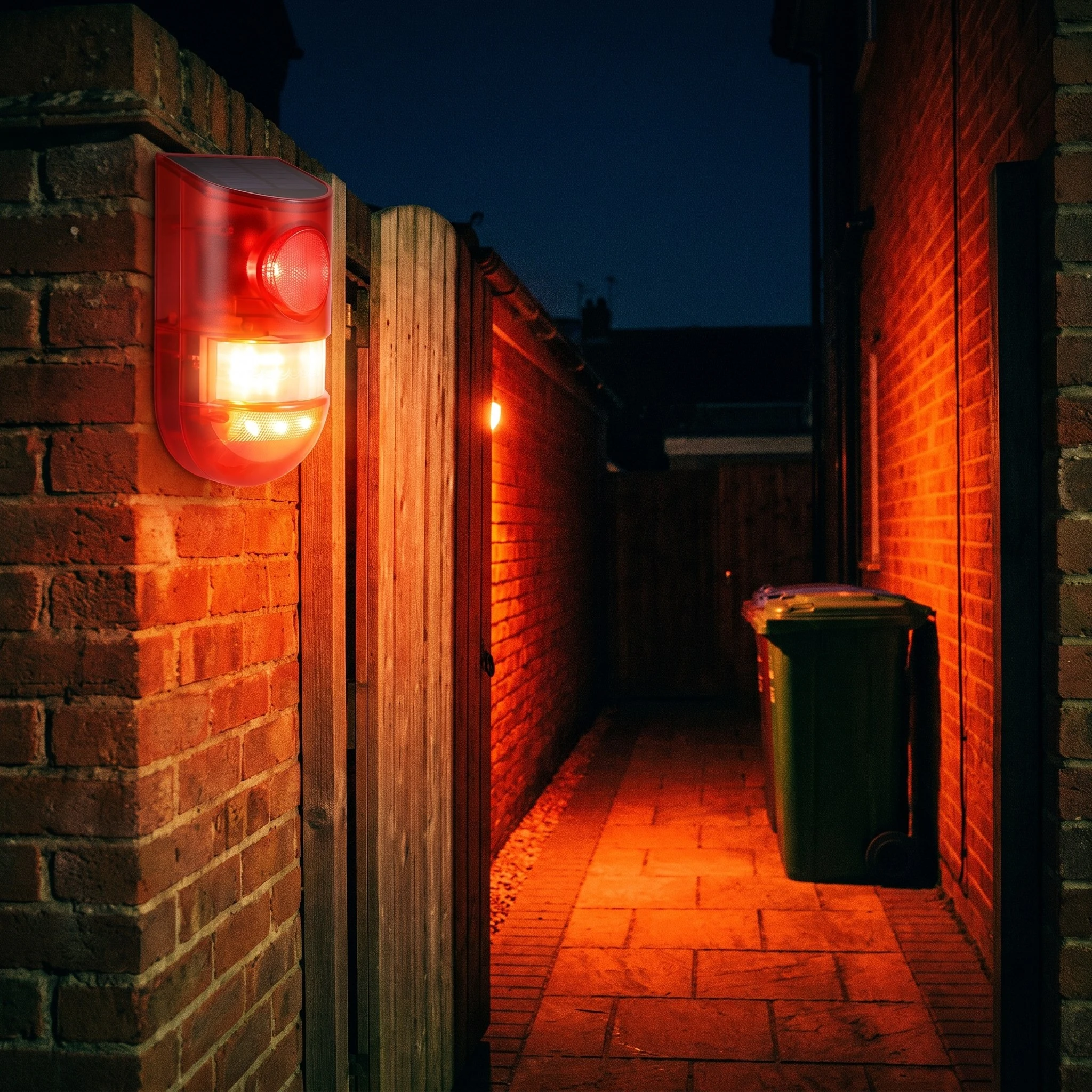
The Dark Side of the House, Answered
Side passages, back gates and the run behind the garage are where nobody ran power and no camera is pointed. An alarm that needs neither is the only thing that goes there.
- 129dB siren plus a hard white-amber strobe
- No wiring, no trench, no electrician
- Solar panel on top — it charges itself
- Four modes, set with one button
Mounted and Armed in About a Minute
Put it where they come in
The gap in the hedge, the coop post, the top of the side gate. Anywhere from one to eight feet up, on a post, fence, tree or wall, facing the way they arrive.
Press once for your mode
Each press steps through the four modes — siren and strobe all day, strobe only, or either one restricted to night. The LED confirms which one you are in.
Let the sun do the rest
Give the panel six to ten hours of open sky for the first fill. After that it tops itself up daily and runs about fifty nights per charge. USB is there for the grey weeks.
Pick Your Pack
Four is the usual answer — the garden, the coop, the side gate and the back of the garage. One alarm moves the problem twenty feet to the left; a perimeter is what actually stops it.
★★★★★ on gardens, coops, gates and driveways
What Buyers Say
“The deer had been stripping my bean rows every night for a month. Put two of these on the corner posts and it stopped the same week. They come to the fence line now, hear it, and turn around.”
“We lost three hens to a raccoon in the spring. One of these on the coop post and we have not had a single thing get in since. It woke me up the first time it went off and honestly that is the point.”
“Bought the four pack for the garden, the shed, the side gate and the back of the garage. No wiring at all, took about ten minutes total, and they have run all summer without me touching them.”
“Works exactly as described and it is genuinely loud. Only note is that it does pick up our dog in the daytime, so I switched it to the night-only mode and that solved it.”
“Been through a fortnight of rain and a hard frost and it has not missed a night. I like that the panel keeps it topped up, no batteries to buy and nothing to remember.”
“Have one at the top of the drive facing the road. The strobe alone is enough that people stop and look before they get near the house. Cheaper than one month of the monitoring service we cancelled.”
30 Days to Change Your Mind
If it is not loud enough, or it will not go where you wanted it, return it within 30 days of delivery for a refund. Email support first and they will issue an RMA number.
Before You Order
About the same ballpark as a smoke alarm at arm's length — loud enough that you would not stand next to it by choice. That is the whole mechanism: it is unpleasant, so whatever set it off leaves. If it is too much for a close neighbour, two of the four modes flash without the siren.
Yes — a PIR sensor cannot tell your dog from a raccoon, it only sees a warm thing moving. Mount it facing the boundary you want protected rather than the middle of the garden, and put it on a night-only mode so it is dormant while pets are out during the day.
Roughly 5 to 8 metres, which is about 16 to 26 feet, across a 125° arc. Mounted between one and eight feet up, that covers a raised-bed garden, a coop run or the width of a side passage from a single point.
No. Six to ten hours of direct sun gives it a full charge, and a full charge runs for around fifty nights, so a cloudy week makes no practical difference. For a long grey stretch there is a USB cable in the box and rechargeable batteries inside.
It is IP65 rated in an ABS housing — sealed against dust and rated for heavy rain, and built to stay outside through the seasons. It is not meant to be submerged or jetted directly with a hose.
One: siren and flashing lights, day and night. Two: flashing lights only, day and night, no siren. Three: siren and flashing lights, night only. Four: flashing lights only, night only. One button cycles through them, and pressing again switches the unit off.
Most people start with four and cover the garden, the coop or shed, the side gate and the back of the property. One alarm protects one approach — animals simply come in somewhere else — so think in approaches rather than acres. Eight and twelve work out cheapest each.
Make the Yard
a Bad Idea
129 decibels, a strobe, and a solar panel that keeps it going all season.