Solar Motion Alarm Perimeter Checks for Rural Driveways
 Jordan HaleStaff Writer
September 26, 2026 — The shift toward self-sustaining perimeter security has accelerated as homeowners prioritize systems like the Solar Motion Alarm that operate independently of the local power grid.
The first thing I noticed was the silence of the gravel at the far edge of the property, a distance that usually renders traditional wired sensors useless. While exploring wireless options, I found that modern systems like those from Absolute Automation utilize integrated solar panels and built-in rechargeable batteries to maintain constant surveillance without the need for trenching cables across a lawn. This transition to solar-powered detection isn't just about convenience; it is about maintaining a reliable line of sight where electrical outlets simply do not exist.
The 5-Point Perimeter Framework
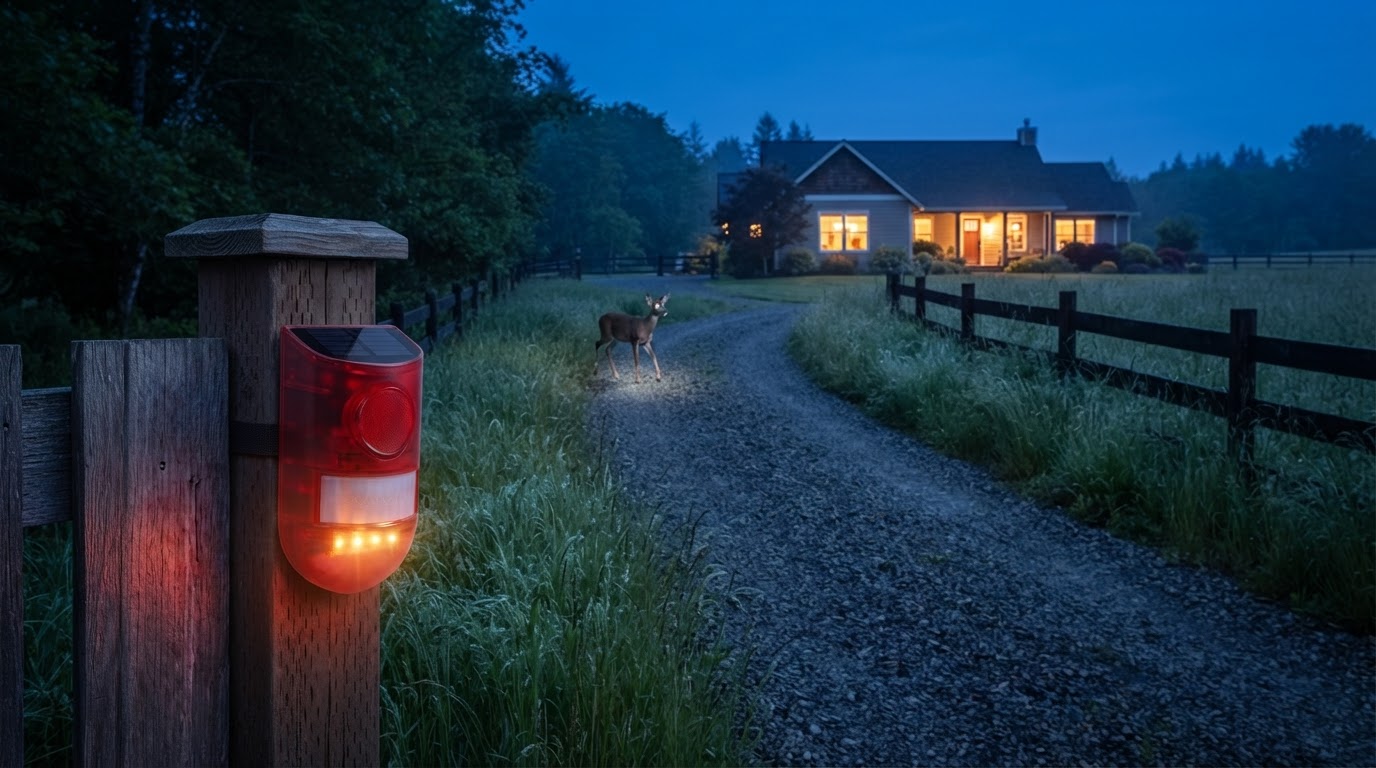
When I began setting up the Solar Motion Alarm, I realized that driveway security is less about the alarm itself and more about the geometry of the entrance. I spent an afternoon walking the property line, feeling the weight of the sensor in my hand as I looked for a mounting point that caught the midday sun while remaining obscured from the main road. The Solar Motion Alarm is designed to thrive in these remote corners, utilizing a high-efficiency photovoltaic cell to trickle-charge its internal battery during daylight hours. This allows the PIR (Passive Infrared) sensor to remain active through the longest winter nights, detecting the heat signatures of approaching vehicles or pedestrians. It turns out that height is the most critical variable; mounting the unit approximately six to eight feet high prevents smaller wildlife from triggering false alerts while ensuring a clear path for the wireless signal to reach the indoor receiver. Unlike the Hosmart 1/2 Mile 4-Zone Solar Driveway Alarm Kit, which offers expansive multi-zone coverage, the Solar Motion Alarm focuses on a streamlined, high-decibel response that is immediate and unmistakable. The sensor housing is rated for extreme weather, meaning the internal circuitry stays dry even during the heavy, horizontal rains that often sweep across open acreage. By aligning the sensor at a slight downward angle toward the primary path of travel, I was able to create a reliable trigger zone that ignores the swaying of nearby branches.
Expert tip: Before permanently mounting your hardware, perform a "walk test" at dusk to ensure the PIR sensor's sensitivity is tuned to the specific speed of a vehicle entering the driveway versus a person walking, as temperature changes can slightly affect detection range.
Securing a long entrance is often the first step before you learn how to install a Solar Motion Alarm for home security across the rest of the property. Once the driveway is covered, you might consider a solar security alarm for shed protection to safeguard expensive tools. For those who travel, having a portable solar alarm for camping provides that same peace of mind in the backcountry. I keep coming back to the simplicity of the setup, which mirrors the ease of a Solar Motion Alarm installation elsewhere.
Reliable driveway monitoring is the cornerstone of a proactive security strategy, providing the early warning necessary to respond to visitors before they reach your front door. According to Absolute Automation, these solar-powered sensors monitor driveways day and night almost indefinitely when positioned correctly.
Sources
- Driveway Alarm - HOSMART
- OhmKat SOLAR POWERED Long Range Motion Driveway Alarm
- No More Surprise Visitors with THIS Solar Driveway Alarm! - YouTube