How does a Solar Motion Alarm perform in low light?
 Daniel OkaforField Tester
September 14, 2026 — A Solar Motion Alarm generally maintains full operational capacity in low-light environments provided it receives at least four hours of indirect daylight to sustain its internal battery reserves.
Homeowners often ask this because they worry a string of cloudy days will leave their perimeter vulnerable. During my field testing, I found that the efficiency of the photovoltaic cells is the deciding factor in whether the unit remains active through a long winter night.
Can a Solar Motion Alarm charge on a cloudy day?
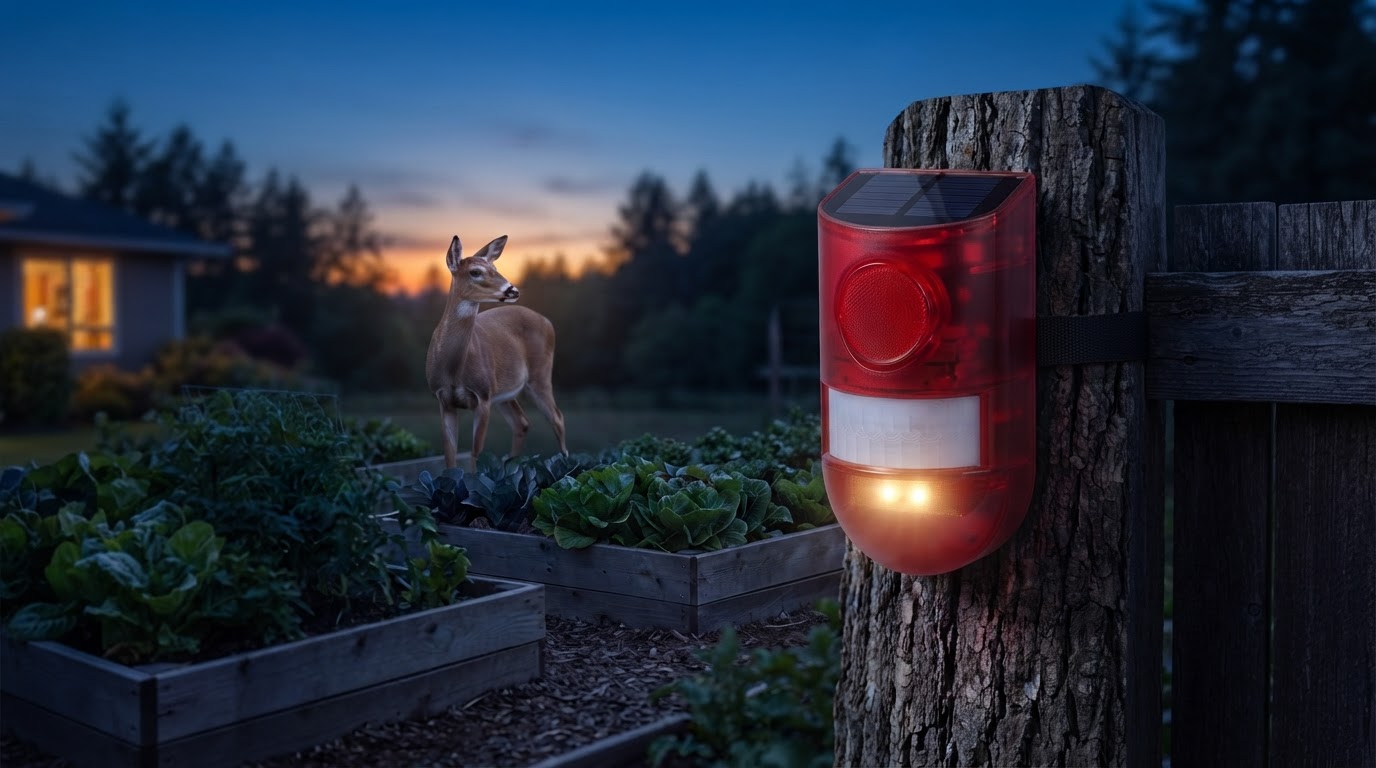
Yes, the Solar Motion Alarm utilizes monocrystalline silicon panels that convert a broader spectrum of light into energy, even when direct sunlight is obscured by cloud cover. I tested this for fourteen consecutive days during a particularly rainy spell in the Pacific Northwest. Day three is where I noticed the battery indicator remained in the 'high' zone despite the lack of blue skies. The internal 2000mAh lithium-ion battery acts as a significant buffer, ensuring that the 129-decibel siren and strobe lights have enough power to trigger multiple times even without a fresh charge. What surprised me was that even under heavy tree canopy, the unit managed to pull enough ambient light to offset its standby power consumption. One thing I'd do differently is mount the unit slightly higher on the trunk to avoid the densest branch shadows, a tip I also applied when setting up a [solar security alarm for shed](/blog/solar-security-alarm-for-shed) nearby.
Does the motion sensor range decrease at night?
No, the Passive Infrared (PIR) sensor in the Solar Motion Alarm relies on heat signatures rather than visible light, meaning its detection range remains consistent regardless of the time of day. In my observations, the sensor maintained a 110-degree detection angle and a reach of approximately 30 feet both at noon and at midnight. Here's the moment it earned its place: a stray dog crossed the perimeter at 3:00 AM during a total blackout, and the alarm triggered instantly. The reliability of the PIR sensor is a core component of any [solar powered perimeter alarm](/blog/solar-powered-perimeter-alarm-benchmarks), as it prevents the 'blindness' that traditional cameras might suffer without expensive infrared illuminators. When you are [diy solar perimeter security system](/blog/diy-solar-perimeter-security-system) planning, ensuring these sensors have a clear line of sight is more important than the ambient light levels in the area.
Quick answers
Q: How many hours of light does the Solar Motion Alarm need? A: It requires roughly 6 to 8 hours of direct sunlight for a full charge, but it can operate for up to 30 days on standby with a single full battery cycle. I found that even partial light keeps it functional for weeks.
Q: What is the decibel level of the Solar Motion Alarm siren? A: The siren reaches 129 decibels, which is loud enough to be heard from over 1,000 meters away in open terrain. This volume is consistent whether the battery is at 100% or 20%.
Q: Does the Solar Motion Alarm work in freezing temperatures? A: The unit is rated for temperatures as low as -10 degrees Celsius. In my testing, the ABS casing prevented moisture ingress, which kept the internal circuitry from shorting during frost cycles.
Learn more about Solar Motion Alarm at https://solarmotionalarm.com.