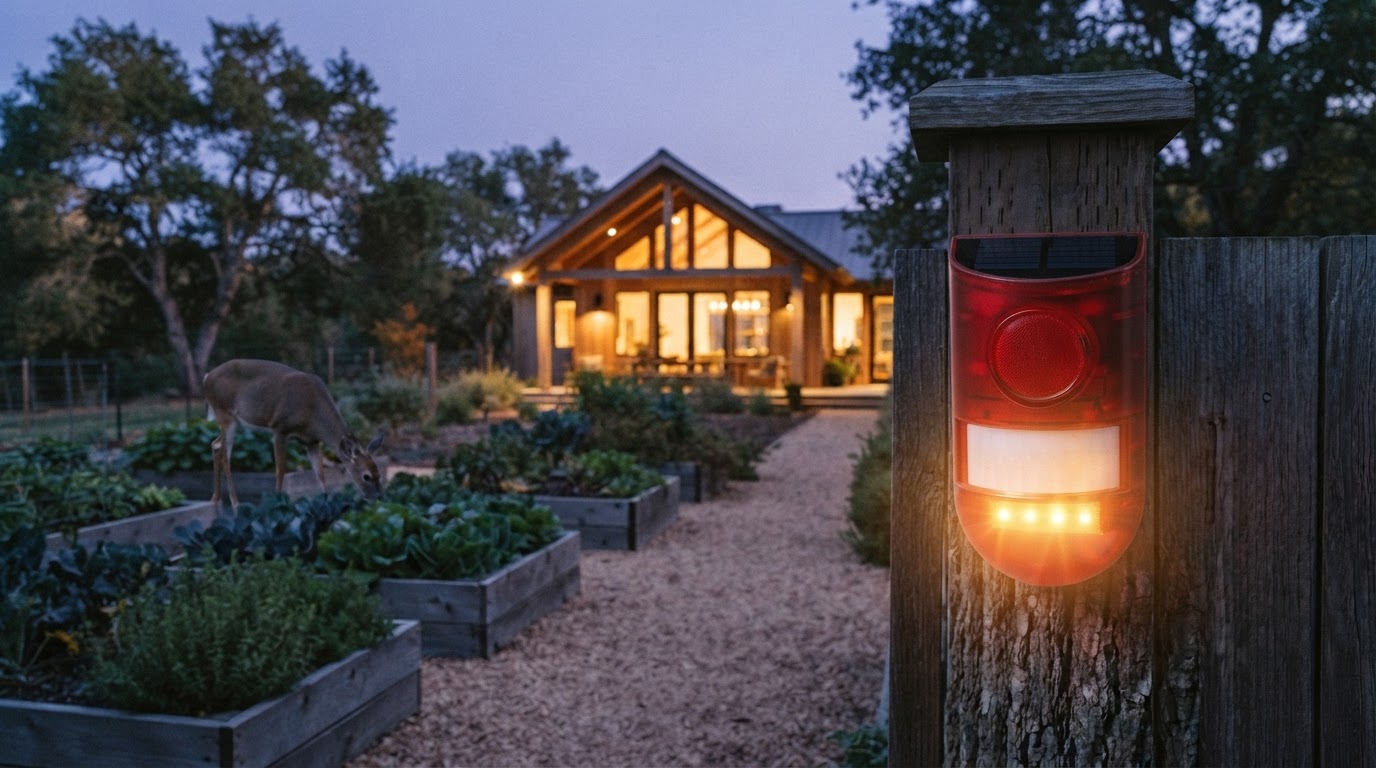
How does the Solar Motion Alarm work for property security?
 Sam VasquezBuying Guide Lead
September 19, 2026 — The Solar Motion Alarm utilizes Passive Infrared (PIR) sensors to detect heat signatures and trigger an audible or visual alert, provided the unit has received at least four hours of direct sunlight for a full charge.
Property owners and rural residents often ask this because they need a way to monitor long driveways or fence lines where running electrical conduit is cost-prohibitive. Understanding the mechanics of these units is the difference between a reliable security layer and a device that fails during a string of overcast days.
How does the PIR sensor in a Solar Motion Alarm detect intruders?
A Solar Motion Alarm detects intruders by measuring changes in infrared radiation within its field of view, typically spanning a 110-degree arc. When a human or large animal moves across the sensor's path, the temperature difference between the object and the background environment triggers the internal circuit. I have found that placement is critical; if you angle the sensor toward a metal shed that reflects high heat, you will get false positives all afternoon. The Solar Motion Alarm is designed to ignore minor environmental shifts, but it requires a clear line of sight to function effectively. Between these two options—a standard PIR sensor and a dual-tech microwave sensor—I’d go with the PIR version for outdoor residential use because it draws significantly less power, which is vital for solar-only operation.
Can a Solar Motion Alarm function reliably during winter months?
Yes, a Solar Motion Alarm can function in winter, but its performance depends entirely on the efficiency of its monocrystalline solar panel and the capacity of its lithium-ion battery. During shorter days, the device relies on stored energy to power the solar powered siren with strobe light functions throughout the night. If you live in a northern latitude with heavy tree cover, the battery may not reach a full state of charge, leading to a reduced decibel output or shorter strobe duration. Here's what I'd actually buy: a unit with a detachable solar panel that allows you to mount the alarm in the shade while placing the charger in direct sun. Skip this if your property is consistently shrouded in fog or heavy canopy, as no amount of efficiency can overcome a total lack of photons.
Quick answers
Q: How loud is the siren on a standard unit? A: Most Solar Motion Alarm models produce an alert between 110 and 129 decibels, which is loud enough to be heard from up to 1,000 feet away in open terrain. This volume is comparable to a power saw or a live rock concert.
Q: Does the alarm require a Wi-Fi connection to trigger the siren? A: No, the basic Solar Motion Alarm is a localized system that triggers its own internal siren immediately upon detection. However, if you want mobile notifications, you will need a version that supports remote operation with the Solar Motion Alarm system.
Q: How far can the sensor detect movement? A: A typical Solar Motion Alarm has a detection range of 15 to 30 feet, though high-end solar powered perimeter alarm systems can extend this range to 50 feet under optimal conditions. Factors like ambient temperature and the speed of the moving object will affect the precise trigger point.
If you're on a budget, a single standalone unit placed at a primary entry point is the most effective starting point. I prefer these over hardwired systems for large acreages because they eliminate the need for trenching and expensive cables.
Learn more about Solar Motion Alarm at https://solarmotionalarm.com.