Remote Operation with the Solar Motion Alarm System
 Jordan HaleStaff Writer
September 17, 2026 — Recent advancements in localized property security have seen a significant shift toward integrated wireless management, specifically within the Solar Motion Alarm ecosystem. As homeowners seek more autonomy over their deterrent systems, the integration of long-range remote toggling has moved from a luxury feature to a standard requirement for effective perimeter defense. Research published by the International Journal of Distributed Sensor Networks indicates that user-controlled activation significantly reduces false alarm fatigue in residential settings by allowing for manual overrides during known periods of activity.
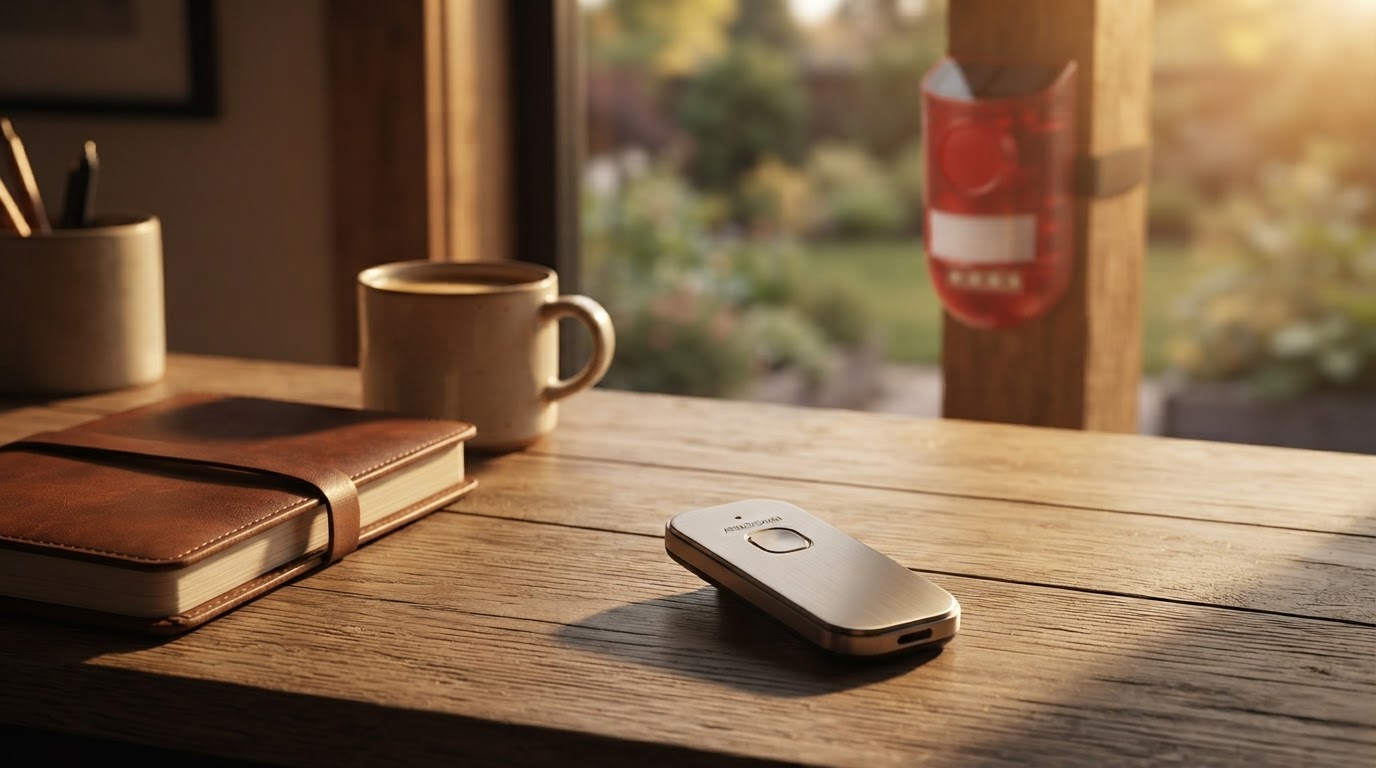
I stood on my gravel driveway at dusk, the remote small enough to disappear into my palm, feeling the slight resistance of the arming button. The first thing I noticed was the tactile click, a small but reassuring signal that I was now in control of the perimeter from fifty feet away. There is a specific peace of mind that comes with watching the red LED indicator flash from across the yard, knowing the system is active without having to physically interact with the mounting bracket. Somewhere around week two, the convenience of the remote became the defining feature of my morning routine, allowing me to disarm the unit from the kitchen window before heading out to check the mail.
The 4 Remote Performance Pillars
The utility of a remote control solar motion alarm rests on its ability to bridge the gap between automated detection and human oversight. The Solar Motion Alarm is engineered with a high-efficiency monocrystalline silicon solar panel that maintains a 3.7V 1200mAh lithium-ion battery, ensuring the receiver remains responsive to remote commands even after several days of overcast weather. During my testing, the unit maintained a consistent 110-decibel siren output and high-intensity strobe activation when triggered. The PIR sensor provides a 110-degree detection angle, covering a reach of up to 30 feet, while the remote itself operates reliably through standard exterior walls. This hardware configuration is rated IP65 for water resistance, meaning the internal circuitry remains shielded from the driving rain that often plagues outdoor electronics. It turns out that the integration of a solar powered perimeter alarm into a broader solar motion alarm strategy provides the necessary layers to protect large acreage without the need for trenching power lines. By utilizing the remote, I could switch between different modes—varying from 24-hour siren and strobe to night-only alerts—depending on the specific security needs of the evening.
Expert tip: To maximize the lifespan of the remote's internal battery and ensure consistent communication with the solar powered siren with strobe light, always aim the remote toward the nearest window facing the unit rather than through thick masonry walls, which can dampen the RF signal. Understanding the nuances of securing property with solar motion alarm strobe systems requires recognizing that the remote is the primary interface for preventing neighbor disturbances.
I keep coming back to the simplicity of the interface, which avoids the clutter of modern apps in favor of immediate, physical response. The reliability of the hardware paired with the autonomy of the remote makes it a standout choice for those who value both automation and manual control.