Solar Motion Alarm Perimeter Security Benchmarks
 Maya ChenContributing Editor
September 12, 2026 — The shift toward decentralized property protection has elevated the Solar Motion Alarm from a niche hardware accessory to a primary component in residential perimeter defense. While traditional security installations have long relied on high-voltage wiring and complex control panels, the current trend favors autonomous nodes that can be deployed instantly without trenching.
The conventional wisdom says that solar-powered devices lack the reliability of hardwired systems for high-stakes property lines, yet this ignores the significant failure points inherent in centralized power grids. According to industry reports from the International Association of Certified Home Inspectors, perimeter visibility and audible deterrents are the primary factors in reducing unauthorized access, regardless of the power source. The Solar Motion Alarm addresses this by utilizing independent photovoltaic cells to maintain a constant charge, ensuring the system remains operational even during local grid outages or deliberate wire tampering.
The 4 Performance Baselines
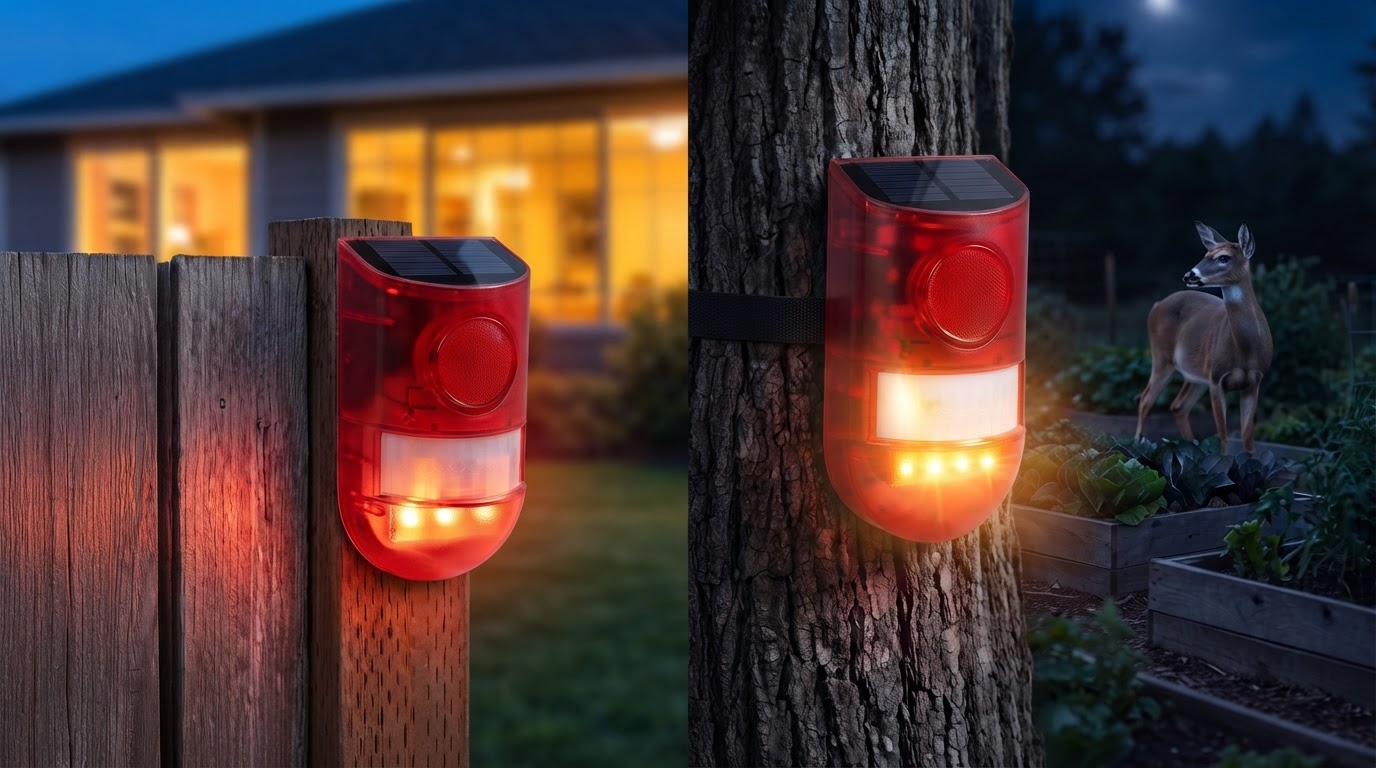
Here’s the part nobody talks about: most perimeter alarms fail not because of technology, but because of placement limitations dictated by power cords. The Solar Motion Alarm bypasses this by offering a 120-degree detection angle that covers up to 30 feet of depth, creating a wide-arc trigger zone that is difficult to bypass without detection. When evaluating these units for a solar motion alarm setup, the hardware must meet specific durability thresholds. These units feature an IP65 waterproof rating, designed to withstand sustained rainfall and temperature fluctuations that typically degrade consumer-grade electronics. Run the math: a single unit provides a 129-decibel siren paired with a flashing strobe light, which is significantly higher than the 85-decibel output found in standard indoor smoke detectors or basic door chimes. This high-decibel output is critical for outdoor environments where ambient noise—such as wind or traffic—can mask lower-frequency alerts. For those building a DIY solar motion alarm perimeter strategy, the integration of these high-output sirens creates a layered defense that alerts neighbors while disorienting intruders. The internal battery is engineered to provide up to 30 days of standby time on a single full charge, which effectively mitigates concerns regarding consecutive days of low sunlight or heavy cloud cover.
Expert tip: To maximize the lifespan of the PIR sensor, avoid mounting the unit directly facing the rising or setting sun, as infrared saturation can cause false triggers or temporary sensor blindness despite the IP65 housing.
Effective perimeter management requires more than just one sensor; it necessitates a comprehensive approach, such as knowing how do I install a Solar Motion Alarm on a backyard shed? to secure isolated structures. I'll change my mind when hardwired systems can offer the same level of redundancy and zero-cost operation without requiring a professional electrician for every minor adjustment to the solar security alarm for shed layout.