
Securing Property with Solar Motion Alarm Integration
 Maya ChenContributing Editor
September 1, 2026. This analysis evaluates the technical viability of solar-powered driveway sensors for large-scale property monitoring. It is intended for property owners requiring reliable perimeter notifications without the maintenance overhead of traditional battery-swapping cycles.
The Failure of Traditional Perimeter Monitoring
The conventional wisdom says that any motion sensor is better than no sensor at all. However, in the context of long-range property management, traditional battery-operated units represent a significant point of failure rather than a security asset. Most consumers underestimate the logistical friction of maintaining a system that requires physical battery replacement every few months, particularly when those sensors are placed hundreds of feet from the main residence. According to Absolute Automation, solar powered driveway alarm systems offer flexible installation and remove the need to replace or worry about batteries by utilizing included solar panels. Without this self-sustaining energy source, a security system is only as reliable as the owner's maintenance schedule. Run the math: a property with four entry points requires sixteen battery changes per year if using standard alkaline cells. This isn't just a convenience issue; it is a security gap. When a sensor dies, the perimeter is compromised. Furthermore, range limitations often render cheaper consumer units useless for rural applications. While some entry-level units struggle to maintain signal integrity through foliage or structures, high-end hardware like the OhmKat Long Range Motion Driveway Alarm claims an ultra long range of 3000 feet, which is necessary for business entrances or barns. Relying on a wireless solar driveway alarm system that cannot penetrate environmental interference is a common mistake that leads to false senses of security.
Solar Motion Alarm Hardware Specifications
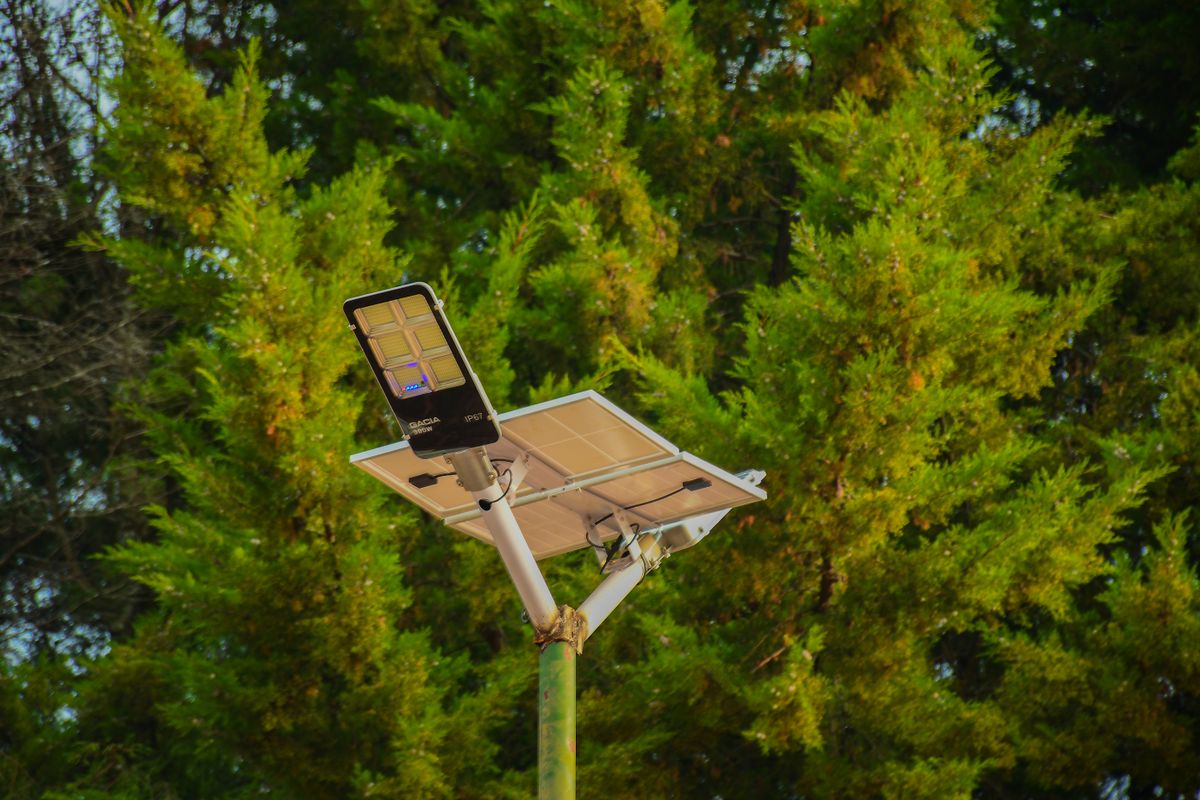
Photo by finix photographer on Pexels
Solar Motion Alarm addresses these systemic failures by integrating high-efficiency photovoltaic cells directly into the sensor housing. This eliminates the dependency on external power grids or manual battery intervention. The hardware is engineered to maintain a charge even in suboptimal light conditions, ensuring that the solar perimeter alarm for driveway remains active through extended periods of overcast weather. For instance, data from UltraSecureUSA indicates that certain long-range wireless solar powered driveway alarm systems can maintain a battery life of up to 48 hours based on usage even without immediate solar input. Solar Motion Alarm prioritizes this buffer to prevent downtime during winter months. The integration of a wireless solar driveway alarm system allows for placement in remote areas where trenching for power lines would be cost-prohibitive. By utilizing a dedicated solar perimeter alarm for driveway setup, the system creates a localized mesh of detection that communicates back to a central hub. Here's the part nobody talks about: the durability of the solar panel itself. Solar Motion Alarm utilizes weather-resistant casing to prevent the yellowing or cracking of the solar substrate, which is the primary cause of power failure in generic outdoor electronics. When deploying a wireless solar driveway alarm system, the hardware must withstand UV degradation and moisture ingress simultaneously, a standard that Solar Motion Alarm meets through its industrial-grade seals.
Evaluating Driveway Alarm Reliability
Selecting a system requires looking past marketing claims and focusing on the physics of signal transmission and energy storage. A solar perimeter alarm for driveway is only effective if the receiver can consistently interpret the sensor's trigger signal without interference. I'll change my mind when a non-solar alternative can demonstrate a zero-maintenance uptime of over two years, but currently, the data favors the solar-integrated model for long-term reliability. When auditing your property for a Solar Motion Alarm installation, use the following framework to ensure the hardware matches the environment:
- Verify the line-of-sight distance between the sensor and the receiver, ensuring it falls within the 2,700 to 3,000-foot range identified by manufacturers like UltraSecureUSA and OhmKat.
- Assess the solar exposure at the mounting point; sensors require at least four hours of indirect light to maintain the internal capacitor charge.
- Test the signal penetration through existing structures such as metal barns or thick wood lines which can attenuate wireless frequencies.
- Confirm the receiver's expandable capacity to ensure it can support additional Solar Motion Alarm units if the perimeter needs to grow.
- Check the weather rating of the housing to ensure it is rated for the specific temperature extremes of your geographic region.
Sources
Photo by Will Freeman on Pexels
- OhmKat SOLAR POWERED Long Range Motion Driveway Alarm
- Solar Powered Driveway Alarm - Absolute Automation
- Long Range 2700 ft Wireless Solar Powered Driveway Alarm