
Why Raccoons Target Gardens and How Motion Sensors Stop Them
Raccoons are highly opportunistic scavengers equipped with keen senses and dexterous paws. Gardens present an easy source of fresh sweet corn, melons, grubs, and trash. To explore complete layout planning for yard safety, consult [the main guide] for overarching strategies.
Nocturnal Foraging Habits of Garden Intruders
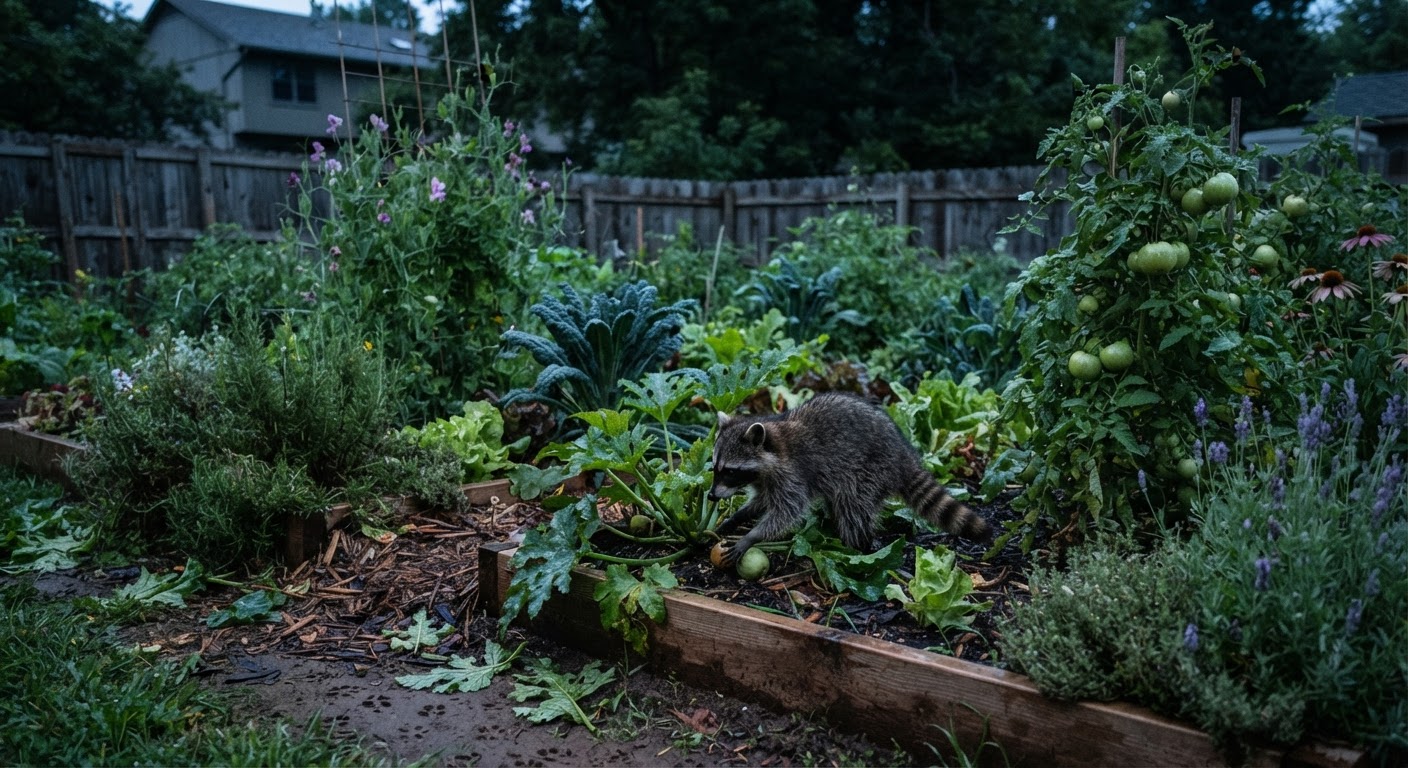
Because raccoons forage primarily under cover of darkness, they rely on predictability and quiet surroundings to navigate residential yards. When a garden offers easy access without threat, animals establish regular feeding routines. Traditional passive measures like small fences or scarecrows quickly lose effectiveness as raccoons realize they pose no real danger.
Disrupting Pest Behavior with Active Deterrence

Active motion detection completely disrupts the predictable environment raccoons rely on. Devices equipped with a wide 125-degree sensing angle detect movement up to 5 to 8 meters (26 feet) away. The moment an intruder steps into range, the unit activates a blinding strobe LED light and a 129dB loud sound noise maker.
This immediate stimulus triggers an instinctual flight response, teaching animals that the area is unsafe. Units using sturdy ABS casing and IP65 waterproof construction ensure this active defense remains operational through heavy rain or winter snow.
Multi-Mode Defense for Complete Yard Coverage
Flexible security systems offer four working modes tailored to your specific suburban or rural needs:
- Mode 1: 24-hour siren and flashing lights for critical areas like chicken coops.
- Mode 2: 24-hour flashing lights only for noise-sensitive locations.
- Mode 3: Nighttime siren and flashing lights for dark garden coverage.
- Mode 4: Nighttime flashing lights only.
Read the full guide: How to Keep Raccoons Out of Garden Spaces: The Complete Defense Guide