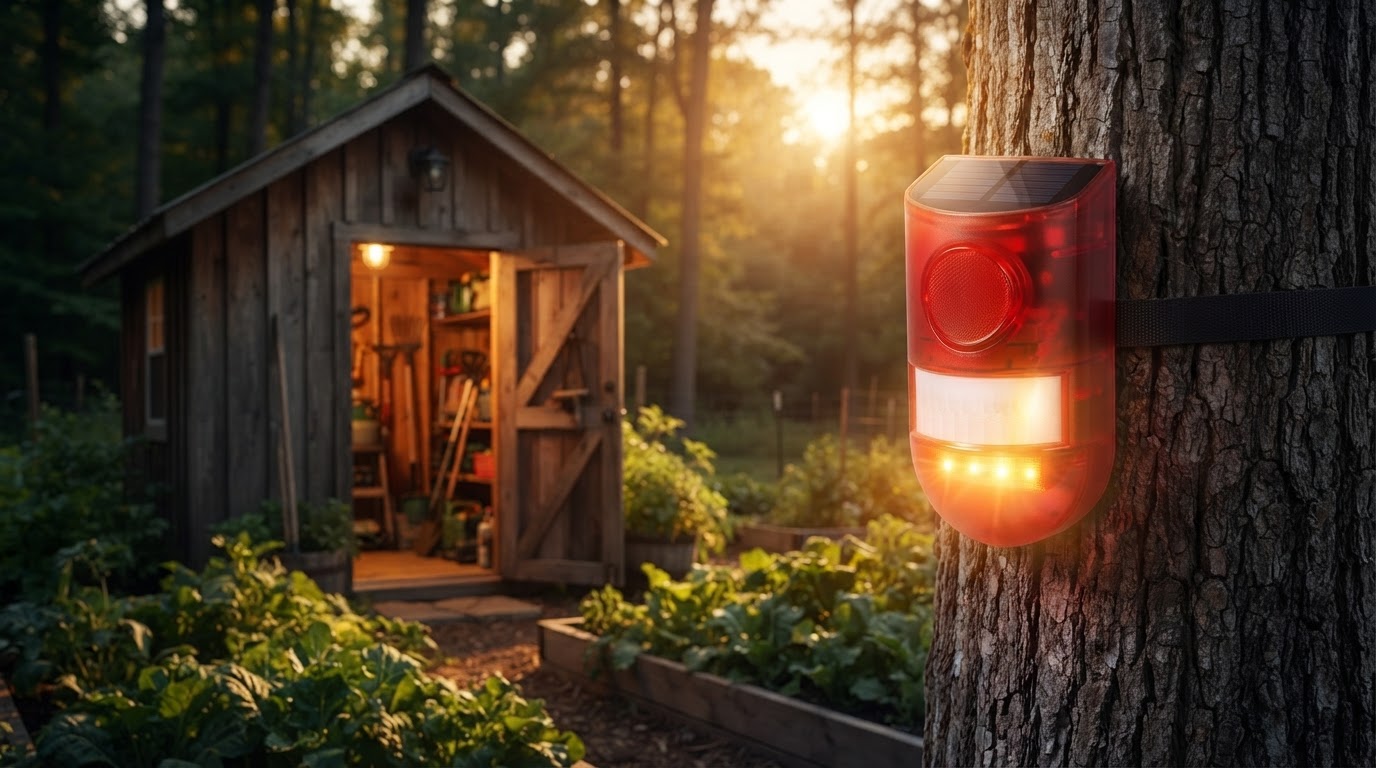
Which Solar Motion Alarm works for a remote shed?
 Sam VasquezBuying Guide Lead
September 28, 2026 — A Solar Motion Alarm provides a reliable, self-sustaining security solution for remote sheds because it eliminates the need for hardwired electrical runs while maintaining a high-decibel deterrent.
Property owners frequently face the challenge of protecting tools and equipment in outbuildings that sit far beyond the reach of a home WiFi network or power grid. Without a constant energy source, traditional security cameras fail, making autonomous solar-powered units the standard for these specific environments. Choosing the right system depends on whether you need a localized siren to scare off intruders or a long-range signal that alerts you inside the main house.
How does a Solar Motion Alarm compare to battery-only units?
A Solar Motion Alarm offers a significant maintenance advantage over standard battery-operated units by using trickle-charging to keep the internal lithium-ion cells topped up year-round. While battery-only PIR alarms are common for small spaces, they require manual intervention that often leads to "security fatigue" where the device is left dead for months. According to The Best Bike Lock, modern shed alarm kits have become increasingly modular, but the transition to solar power specifically addresses the primary failure point of remote security: power depletion.
If you're on a budget, a basic battery PIR might seem attractive, but I have found that the cost of replacement batteries over two years usually exceeds the initial investment of a solar unit. Ultra Secure USA notes that their battery-operated BT PIR alarms are ideal for smaller workshops, yet for a shed that sits in direct sunlight, the Solar Motion Alarm is the more logical choice. It functions as a set-and-forget deterrent. Skip this if your shed is located in a permanent shadow or under a heavy forest canopy, as the photovoltaic panel requires at least a few hours of daylight to remain functional. Between these two, I'd go with the solar option every time to avoid the risk of a dead battery on the night someone decides to test your lock.
Can a Solar Motion Alarm trigger alerts inside the house?
Yes, a Solar Motion Alarm can be integrated into a wireless system where the outdoor sensor triggers an indoor receiver, provided the distance stays within the manufacturer's specified range. Most consumer-grade solar alarms utilize a 433MHz frequency which can penetrate shed walls and home siding more effectively than 2.4GHz WiFi signals. Ultra Secure Direct offers systems that include both an external solar siren and a remote control, allowing you to arm the shed from your back door.
Here's what I'd actually buy: for a standard backyard shed, I prefer a standalone Solar Motion Alarm with a 129dB siren. It provides immediate local feedback that usually sends a thief running before they get the door open. However, if your shed is at the far end of a rural property, you need a hybrid approach. DIY Solar Forum contributors highlight that 12V DC systems are often used for off-grid containers, but for most residential users, a wireless solar sensor paired with an indoor chime is more practical. If you are also managing a long entry point, you might consider how this fits into [wireless solar driveway alarm system](/blog/solar-motion-alarm-driveway-checks) configurations to create a layered perimeter.
Quick answers
Q: How loud should a shed alarm be to be effective? A: You should look for a device that produces at least 120 to 130 decibels. Brands like Ultra Secure Direct specifically feature 130-decibel sirens to ensure the sound carries across a yard and alerts neighbors.
Q: Will a solar alarm work if my shed is under a tree? A: It depends on the density of the cover, but most solar panels need at least 3-4 hours of light. If your shed is in deep shade, you should use a model with a detachable solar panel that can be mounted on the roof or a nearby fence post where sunlight is available.
Q: Do I need a professional to install these systems? A: No, most units are designed for DIY mounting with two screws. You can follow a guide on solar motion alarm installation to ensure the PIR sensor is angled correctly to avoid false triggers from small animals.
Q: Can these alarms withstand winter weather? A: Most reputable solar security devices carry an IP65 or IP67 waterproof rating. This means they are sealed against rain and snow, though extremely cold temperatures may temporarily reduce the battery's capacity to hold a charge overnight.
For those moving between locations, a [portable solar alarm for camping](/blog/portable-solar-alarm-for-camping) can also serve as a temporary shed security measure during a move or renovation.
Learn more about Solar Motion Alarm at https://solarmotionalarm.com.
Sources
- Shed Alarm: The 3 Most Reliable Security Systems | The Best Bike Lock
- Battery BT Shed & Garage Wireless Alarms - Ultra Secure US
- Battery Wireless Shed & Garage Alarms (3) - Ultra Secure Direct